
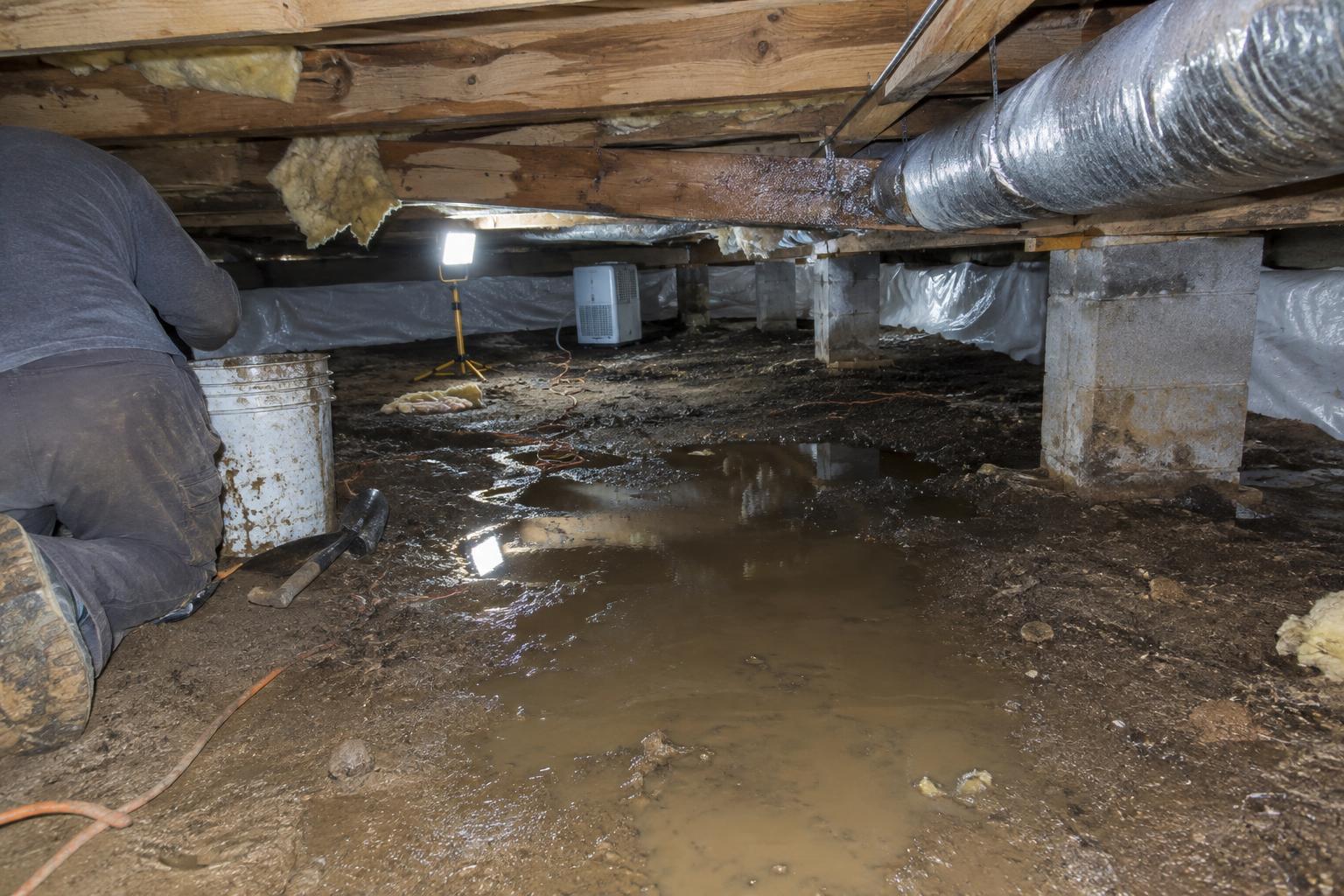
If you live in Andersonville, you probably do not think about the space under your floor until something feels off. A musty smell drifts up into the hallway. The floor over the back bedroom has a little bounce to it. You open a vent one summer and feel damp, heavy air roll out. These are everyday signs in this part of Anderson County, and they almost always start in the crawl space.
The ground here works against a vented crawl space. Red clay holds water after a storm instead of draining it away. Pockets of karst limestone move water in odd directions underground, so moisture shows up where you least expect it. Then the humid East Tennessee summer does the rest. Warm outside air flows through the foundation vents, hits the cool crawl space, and leaves water behind on wood, dirt and pipes. Over time that moisture is what rots joists and feeds mold.
What a Wet Crawl Space Looks Like Under an Andersonville Home
When we crawl under a home near Norris Lake or off Andersonville Highway, we look for a few specific things. Standing water or soft, dark mud on the dirt floor is the clearest sign. We check the floor joists and the main girder for staining, cupping and that gray fuzzy growth that means mold has taken hold. Sagging or bouncy floors upstairs usually trace back to joists that have lost strength or piers that have settled into soft clay.
We also look at the insulation. Fiberglass batts between the joists soak up humidity, get heavy, and fall onto the dirt in clumps. Once that happens they stop insulating and start holding water against the wood. Rusty duct straps, condensation on metal, and a strong earthy smell all point to the same root cause, which is too much moisture with nowhere to go.
How We Repair and Dry Out the Space
Our crawl space repair in Andersonville follows the same practical order every time. First we deal with the water. If water is coming in low, we grade the dirt, dig a drainage path, and add a sump system so water collects in one spot and gets pumped out instead of sitting under the house. Getting the standing water handled first means nothing we install later is fighting a losing battle.
Next we handle the structure. Rotted or weakened joists get sistered with new lumber. A sagging girder gets supported with adjustable steel jacks set on solid footings so the floor above stops flexing. We do not rush this part, because a level, supported floor is what keeps your doors and trim working right season after season.
Then we seal the space. We remove the ruined insulation and old debris, lay down a thick vapor barrier across the dirt and up the foundation walls, and seal the seams so ground moisture stays trapped below the liner. In many homes we add a dehumidifier sized for the space to hold humidity down through the summer. This full approach is what we mean by Crawl Space Waterproofing, and it is the difference between a crawl space that dries out once and one that stays dry.
Why Sealing Beats Leaving the Vents Open
For a long time, open foundation vents were the standard. The idea was that outside air would carry moisture away. In our humid climate that logic runs backward most of the year. On a July afternoon in Anderson County, the outside air is loaded with moisture, and letting it pour into a cool crawl space just gives that water a cold surface to settle on.
Sealing the dirt with a vapor barrier and controlling the air with a dehumidifier breaks that cycle. The wood stays drier, mold loses the conditions it needs, and the air that rises into your living space is cleaner. A good share of the air you breathe at home comes up from below, so a dry crawl space is something you notice in daily comfort, not just in a report.
Working With Waterproofit TN
We are a crawl space company, and that is all we do. We are licensed and insured, and our work is backed by a workmanship warranty. We serve Andersonville and the surrounding towns including Norris, Clinton, Heiskell, Rocky Top and Briceville. Our hours are Monday through Friday, 9am to 5pm. We do not offer after hours or emergency calls, and we do not handle insurance claims, so you always know exactly who you are dealing with and what the plan is.
If you have noticed any of the signs above, the right first step is an inspection. We go under the house, look at the real conditions, and give you a straight explanation of what is happening and what it will take to fix it. No pressure, just a clear picture of your crawl space.