
A lot of people in Claxton assume that open foundation vents keep a crawl space dry. In our humid summers, those vents mostly pull wet air underneath the house. Warm July air drifts in, hits the cooler soil and ductwork, and condenses. By August the floor joists are damp to the touch, and the dirt below has a smell you can pick up from the hallway.
That is the everyday reality for a lot of homes off Edgemoor Road, along the Clinch River side of Anderson County, and up the ridges toward Clinton. The houses range from 1950s block foundations to newer builds, but the conditions underneath them are shared. Red clay holds water and drains slowly. The limestone bedrock below it is full of cracks and channels, so groundwater can show up in places that seem random. Hillside lots send runoff straight toward the foundation after a heavy storm.
This post walks through what crawl space repair involves here, in plain terms, so you know what to look for and what to ask.
What Goes Wrong Under Claxton Homes
Most problems we see start with moisture and then spread to the wood. The usual chain looks like this:
- Humid air enters through vents and condenses on cool surfaces. - Rain soaks the clay along the foundation and seeps in at the footing or through block walls. - Water pools in low spots of the dirt floor and sits for days. - Joists and subfloor stay damp long enough for mold to grow and fungus to soften the wood. - Fiberglass insulation absorbs water, sags, and drops onto the ground.
From inside the house, you might notice a floor that feels soft or bouncy near the kitchen or bathroom, musty air when the HVAC kicks on, cupping hardwood, or more spiders and crickets than usual. None of those mean the house is in trouble tomorrow. They do mean the crawl space needs a look.
How We Inspect Before Anything Gets Quoted
A good inspection takes time and gets dirty. A crew member goes all the way through the crawl space with a light and a moisture meter. We check:
- Where water is entering, and whether it comes from surface runoff, groundwater or condensation - Moisture readings in the joists, beams and subfloor - Mold growth and how far it has spread - Sagging or cracked joists, and piers that have settled or shifted - The condition of any existing vapor barrier and insulation - How gutters and grading outside are directing water
We take photos so you can see what we saw without crawling under there yourself. Then we explain which problems are causing the others. Fixing a sagging joist without stopping the moisture that weakened it only sets up the same repair again in a few years.
The Repair Work, in the Order It Usually Happens
Every house is different, but crawl space repair in Claxton tends to follow a steady sequence.
**Get the water out and keep it out.** If water collects on the floor, we may shape the soil toward a low point, install a perimeter drain, and add a sump pump that carries water away from the house. On karst ground, water can rise from below after long rains, so a sump gives it somewhere to go. Our Crawl Space Waterproofing page goes into more detail on drainage options.
**Clean up mold and damaged material.** Wet insulation and debris come out. Mold on the framing gets treated. Wood that is soft or rotted gets checked to see whether it needs replacing.
**Repair the framing.** Sagging joists can be sistered with new lumber, and adjustable steel supports can be set under beams that have dropped between piers. We raise them gradually so the floor comes back toward level without stressing drywall or trim upstairs.
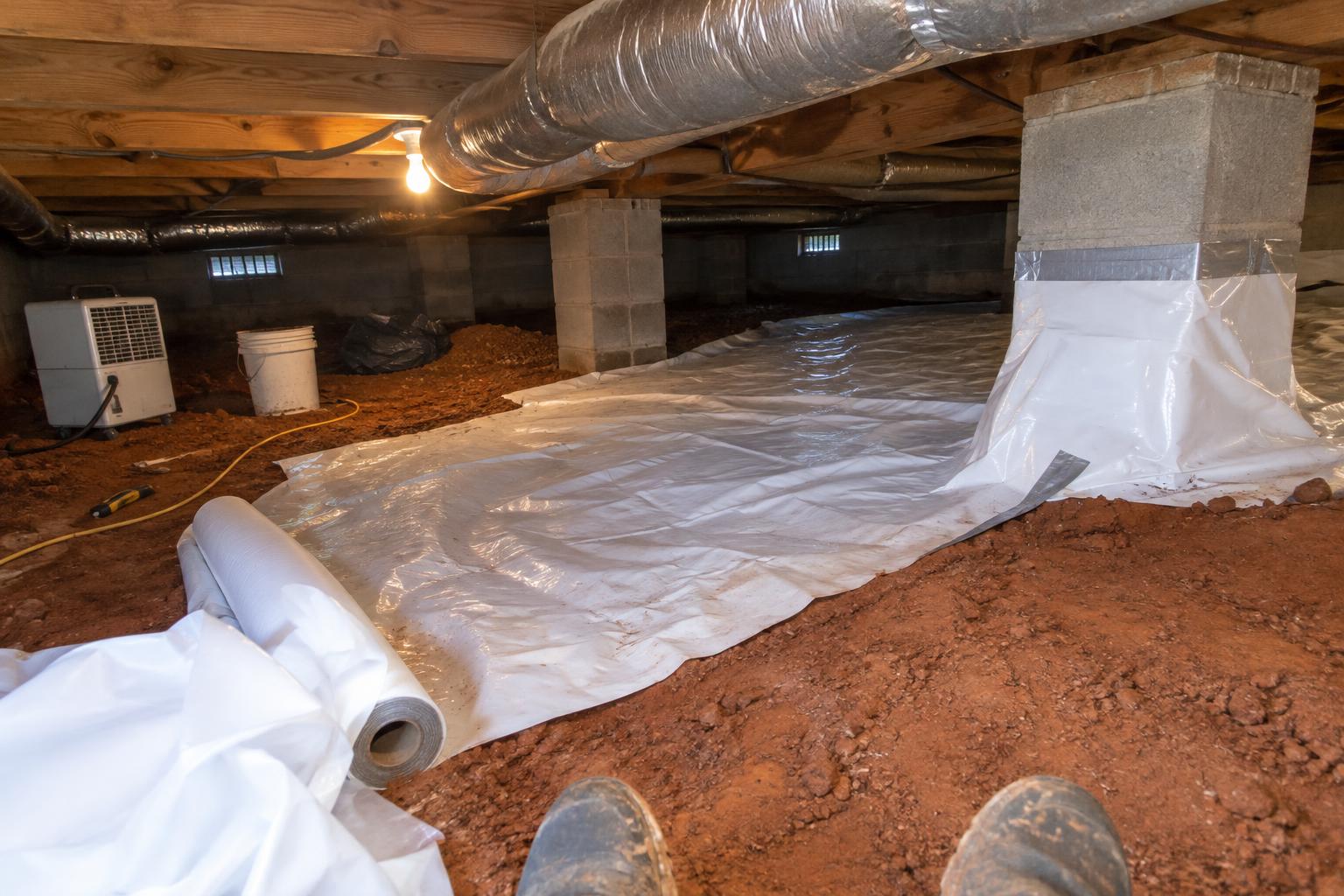
**Seal the space.** A heavy vapor barrier goes across the dirt floor and up the walls and piers, with overlapping seams taped closed. Vents get sealed so humid outdoor air stops flowing in.
**Control the air.** A crawl space dehumidifier keeps humidity down through the summer. It drains to the sump or to the outside, so nobody has to empty a bucket.
Some homes need only part of this. A newer house with a dry floor and only condensation may just need sealing and a dehumidifier. An older block foundation on a slope with standing water usually needs the full list.
When Water Is Coming In Right Now
After a long rain, some Claxton homeowners find standing water under the house, or hear a sump that keeps running and running. When that happens, call us and tell us water is coming in. We will fit you in as early as we can, find where it is entering, and talk through what to do first to limit further damage.
In the meantime, a few things help. Check that gutters are clear and that downspouts discharge away from the foundation. Shut off power to any equipment sitting in water. Keep kids and pets out of the crawl space until it has been looked at.
What You Get When the Job Is Done
At the end of a repair you should have a crawl space that stays dry through a humid summer and a wet spring, wood that tests dry, floors that feel solid underfoot, and air in the house that no longer smells musty. Ductwork and plumbing sit in a cleaner, drier space, and anything you store down there stays in better shape.
Waterproofit TN is licensed and insured, and our work is backed by a workmanship warranty. We serve Claxton and nearby communities across Anderson and Knox counties, including Clinton, Karns, Heiskell, Powell and Hardin Valley. To schedule an inspection, call 865-503-5483.