
What Halls homeowners notice first
You notice it first in the back bedroom on a muggy July afternoon: a damp, earthy smell that wasn't there in April. A week later the floor by the tub feels a little soft underfoot, or a doorway that used to swing free starts to stick. In Halls, those small changes usually trace back to the same place, the crawl space under the house.
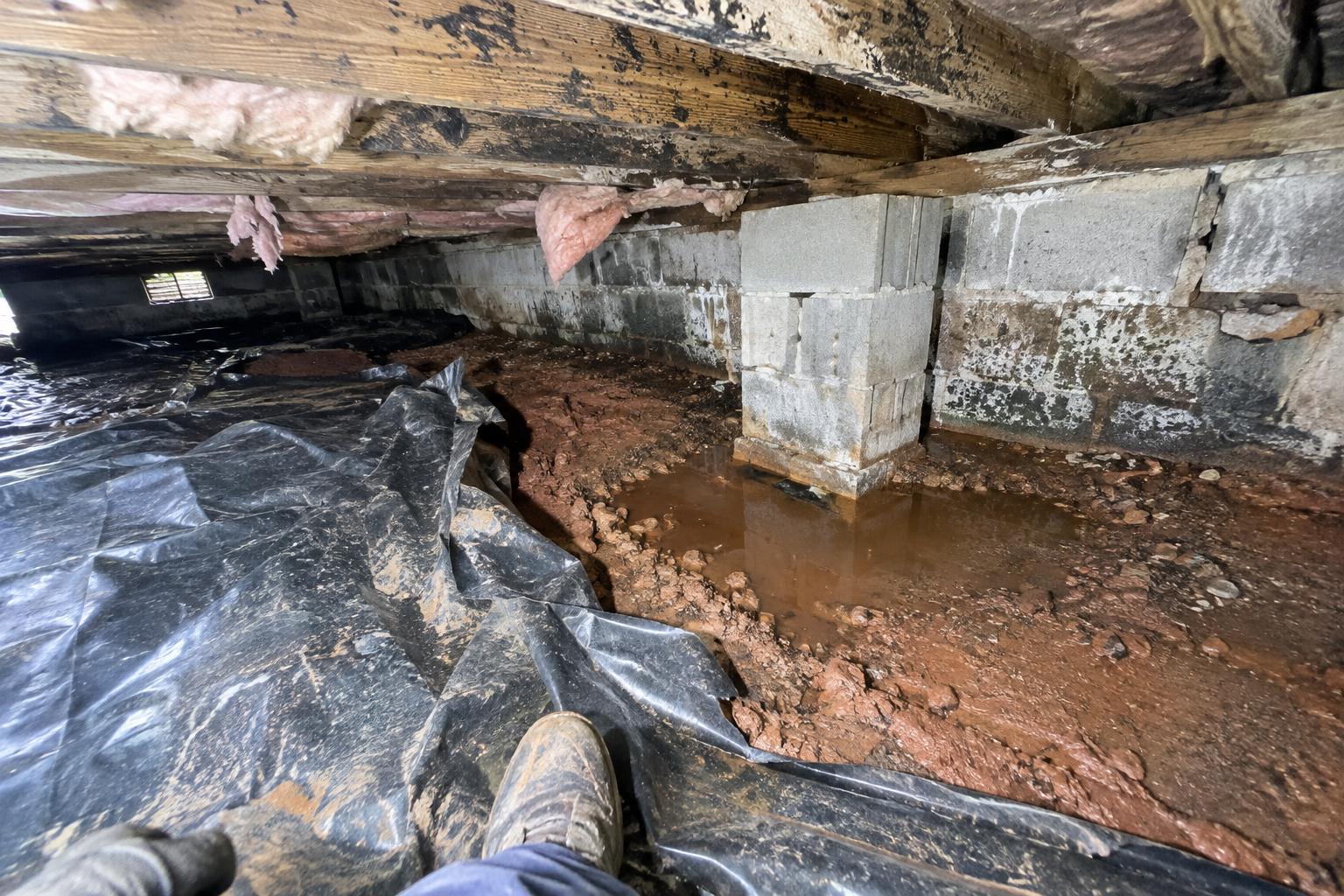
A lot of homes off Maynardville Pike, Emory Road and the side streets around Halls Crossroads were built on vented crawl spaces. Many of them have been standing for decades, and the original block piers and wood girders have carried a lot of damp seasons. East Tennessee summers push warm, wet air through those vents. It meets cooler soil and ductwork below, and the moisture condenses on the wood. Give it a few years and you get mold on the joists, sweating ducts, insulation sagging out of the bays and framing that starts to soften.
Why crawl spaces in Halls stay wet
Three local conditions work together here.
**Red clay.** The soil across north Knox County holds water and drains slowly. After a heavy rain, water that soaks in near the house tends to sit against the foundation wall, then seeps through block joints or under the footing into the crawl space.
**Karst limestone.** The ridges and valleys around Halls sit on limestone that moves water underground in ways that are hard to predict. Groundwater can rise into a crawl space from below even when the yard looks dry.
**Slope and low spots.** Plenty of lots here sit below the road or on the side of a ridge, and some sit low near Beaver Creek. Runoff heads straight for the house, and gutters that dump at the corner of the foundation add to it.
The result is a crawl space with standing water after storms, damp dirt the rest of the year and humidity that rarely drops on its own.
What crawl space repair actually involves
Good crawl space repair in Halls starts with a crew member going under the house with a light, a moisture meter and a camera. They check the wood, the soil, the walls and where water is getting in. You should get photos of what they found and a plain explanation of what each problem means for your house.
From there, the work usually falls into a few groups:
- **Structural support.** Sagging floors often come from a girder that has settled between piers or joists weakened by years of moisture. The crew adds adjustable steel support posts on solid footings under the girder and sisters new lumber alongside damaged joists. Floors are raised slowly so drywall and trim have time to adjust. - **Wood repair.** Rotted sill plates, joist ends and subfloor sections get cut out and replaced. Wood that is stained but still sound gets cleaned and treated. - **Mold treatment.** Surface mold on framing is cleaned and treated so it stops spreading once the space is dry. - **Clearing old materials.** Wet fiberglass, torn black plastic and leftover construction scraps come out. They hold moisture against the soil and give mold a place to grow.
Fixing the wood without fixing the water just resets the clock. That is why repair and moisture control belong in the same plan.
Drying it out and keeping it dry
Once the structure is sound, the goal is to keep water and humid air from coming back. Crawl Space Waterproofing in Halls typically means some combination of:
- An interior drain along the low side of the crawl space that collects water and carries it to a sump pump, which sends it out and away from the house. - A heavy vapor barrier laid over the dirt and run up the walls, sealed at the seams and around each pier. - Vents and access openings sealed so summer air stops feeding the problem. - A dehumidifier sized for the space, draining to the sump or outside, holding humidity at a level where wood stays dry.
Outside, simple fixes help too. Downspout extensions that carry roof water away from the foundation, plus soil graded to slope away from the walls, cut down how much water reaches the crawl space at all.
When this is done right, the musty smell fades, floors feel solid again and the ducts stop sweating. Many homeowners also notice the rooms above feel less sticky in August.
When water is coming in right now
A crawl space can fill quickly during the kind of storm that stalls over north Knox County. If you look under the house and see standing water, or hear water running where it shouldn't be, call Waterproofit TN at 865-503-5483. Tell us water is coming in. We'll fit you in as early as we can, find where it's entering and walk you through the repair from there.
Until the crew arrives, keep people and pets out of the crawl space. If equipment down there is sitting in water, shut off its power at the panel only if you can do it safely without going under the house.
What to check before you hire anyone
Crawl space work happens where you can't easily see it, so it pays to ask good questions. Look for a company that:
- Is licensed and insured. - Puts a written workmanship warranty on the work. - Shows you photos from under your house, both before and after. - Gives you a written scope that lists each repair, so you know exactly what you're paying for. - Explains how its plan handles the red clay, the limestone and the slope of your specific lot.
Waterproofit TN works on crawl spaces, and that focus shows in how we inspect and how we explain the work. Every home in Halls sits a little differently on its lot, so every plan we write is built around the house in front of us.