
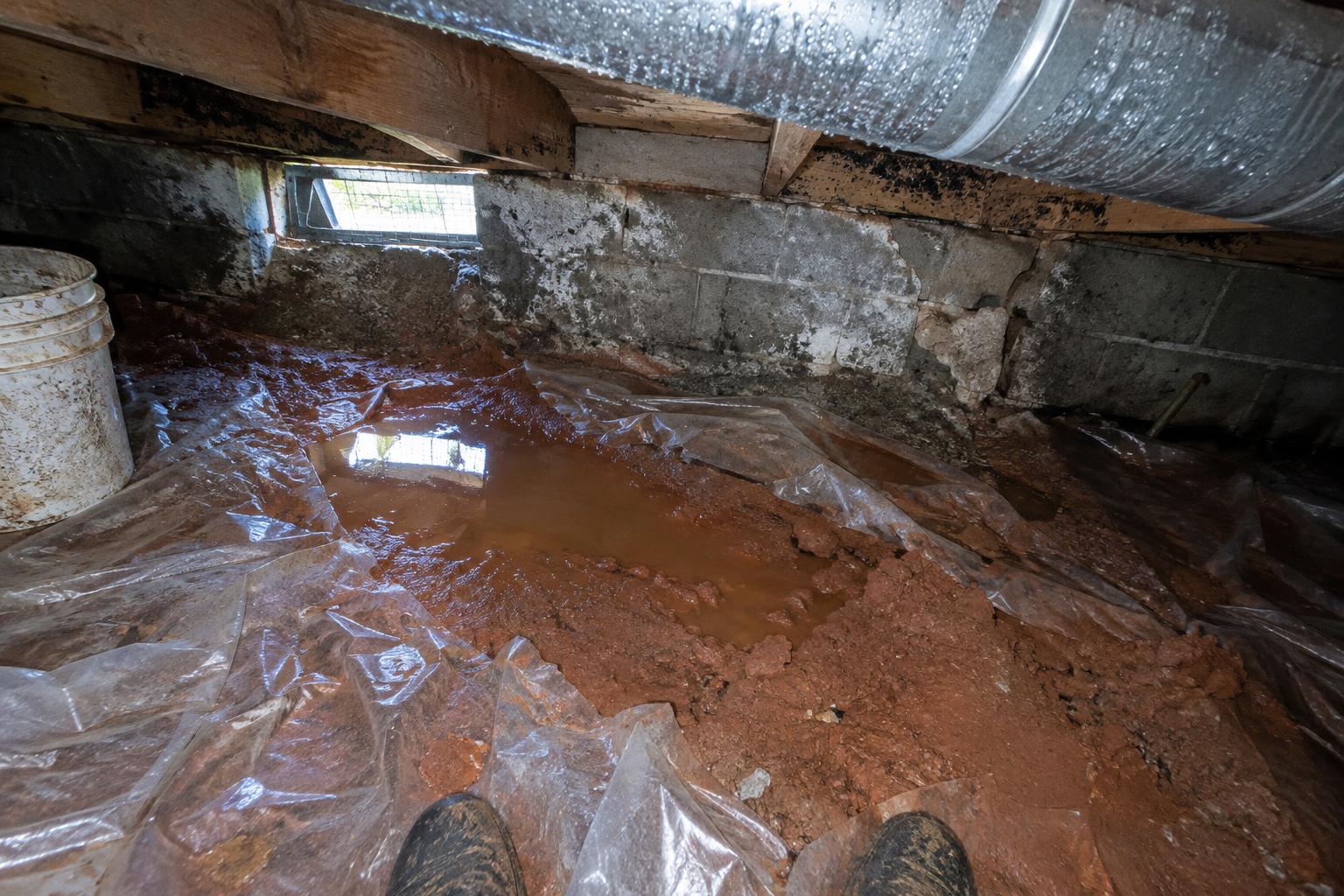
Many Powell homeowners believe a musty crawl space just needs the foundation vents opened wider in summer, yet in East Tennessee those vents pull warm, wet air under the house, where it meets cooler dirt and wood and condenses. That single habit sits behind a lot of the sagging floors, wet insulation and mold we find under homes off Emory Road, Brickyard Road and the streets running down toward Beaver Creek. The good news is that the problem follows a pattern. Once you know the pattern, the repair makes sense.
What Powell Crawl Spaces Are Up Against
Powell sits in the ridge-and-valley country north of Knoxville, and the ground here works against a dry crawl space. The red clay drains slowly, so rain that lands near the house tends to stay near the house. Under the clay is karst limestone, which carries water through cracks and seams in ways that are hard to predict from the surface. A lot that looks high and dry can still have a seep that shows up after a week of storms.
Then there is the air. Knox County summers are long and muggy, and most older homes in Powell were built with vented crawl spaces. Every vent is an open door for humid air. When that air drifts across a duct run carrying cold air conditioning, or settles against floor joists that stay cooler than the outdoors, it drops its moisture right there. You get sweating ducts, damp wood and dirt that never quite dries out.
How Moisture Turns Into Structural Damage
Crawl space trouble rarely starts with something dramatic. It starts with a smell in the hallway or a floor that feels a little soft near the bathroom. Underneath, the steps are usually the same.
First, condensation and seepage raise the moisture level in the wood. Fiberglass batts between the joists soak up water, get heavy and start falling out of place. Mold appears on the joist faces and the subfloor, often as gray or black spotting along the bottom edges. Over time, wood that stays wet loses strength. Sill plates soften, joists notched for old plumbing begin to bow, and girders sitting on short block piers can settle. That is when you notice doors that stick, a dip in the kitchen floor or a crack opening in drywall above a doorway.
Standing water speeds all of this up. In Powell it usually comes from a downspout dumping beside the house, a yard that slopes toward the crawl space walls, or groundwater pushing up through the clay after heavy rain.
What a Good Crawl Space Inspection Covers
A real inspection means someone crawls the whole space with a light and a moisture meter. When we do crawl space repair in Powell, the walk-through usually covers:
- Where water enters, including wall seeps, low spots in the dirt and staining that shows old water lines - Moisture readings on joists, sill plates and the subfloor - Mold growth and how far it has spread - The condition of joists, girders and piers, including any bowing, cracking or rot - Ductwork, insulation and any old plastic sheeting on the ground - Outside conditions such as grading, gutters and downspout outlets
You should come away knowing what is causing the problem and which repairs matter most. Photos help, so ask for them.
The Order the Repair Work Follows
Sequence matters in a crawl space. Sealing up a space that still takes on water just traps the water.
**Water comes first.** If water collects on the dirt, we address it with drainage inside the crawl space, typically a perimeter drain that carries water to a sump pit with a pump that sends it out and away from the house. Outside fixes like extending downspouts can cut down how much water reaches the walls.
**Structure comes next.** Rotted or weakened joists get sistered with new lumber fastened alongside the old. Sagging girders get added support, usually adjustable steel posts set on proper footings, raised gradually so the floor comes back up without cracking the finishes above.
**Then the space gets cleaned and sealed.** Mold is treated, wet insulation comes out, and the vents are closed off. A heavy vapor barrier goes down over the dirt and up the walls and piers, with seams taped. A dehumidifier sized for the space keeps the air dry through August and beyond. That sealing stage is the core of Crawl Space Waterproofing, and it is what keeps the repairs from having to be repeated.
Simple Checks You Can Do This Week
You can learn a lot without crawling the whole space. Open the access door on a humid afternoon and notice the smell. Earthy and sharp usually means mold. Shine a flashlight across the ground and look for puddles, a shiny wet surface on the clay, or plastic sheeting that has torn and bunched up. Look at the nearest joists for white fuzz or dark spotting.
Upstairs, walk the floors in socks and pay attention to spots that dip or bounce. Watch whether your downspouts empty right against the house. After a hard rain, walk the outside and see where water pools. Write down what you find. It makes the inspection faster and more useful.
When Water Is Already Standing Under the House
A flooded crawl space should be looked at soon, because the longer water sits, the more the wood and insulation absorb. Call Waterproofit TN at 865-503-5483, tell us water is coming in, and we will fit you in as early as we can. We work on crawl spaces across Powell and the surrounding communities, we are licensed and insured, and our work is backed by a workmanship warranty. You get a clear explanation of what is happening under your floor and a plan that fixes the cause.