
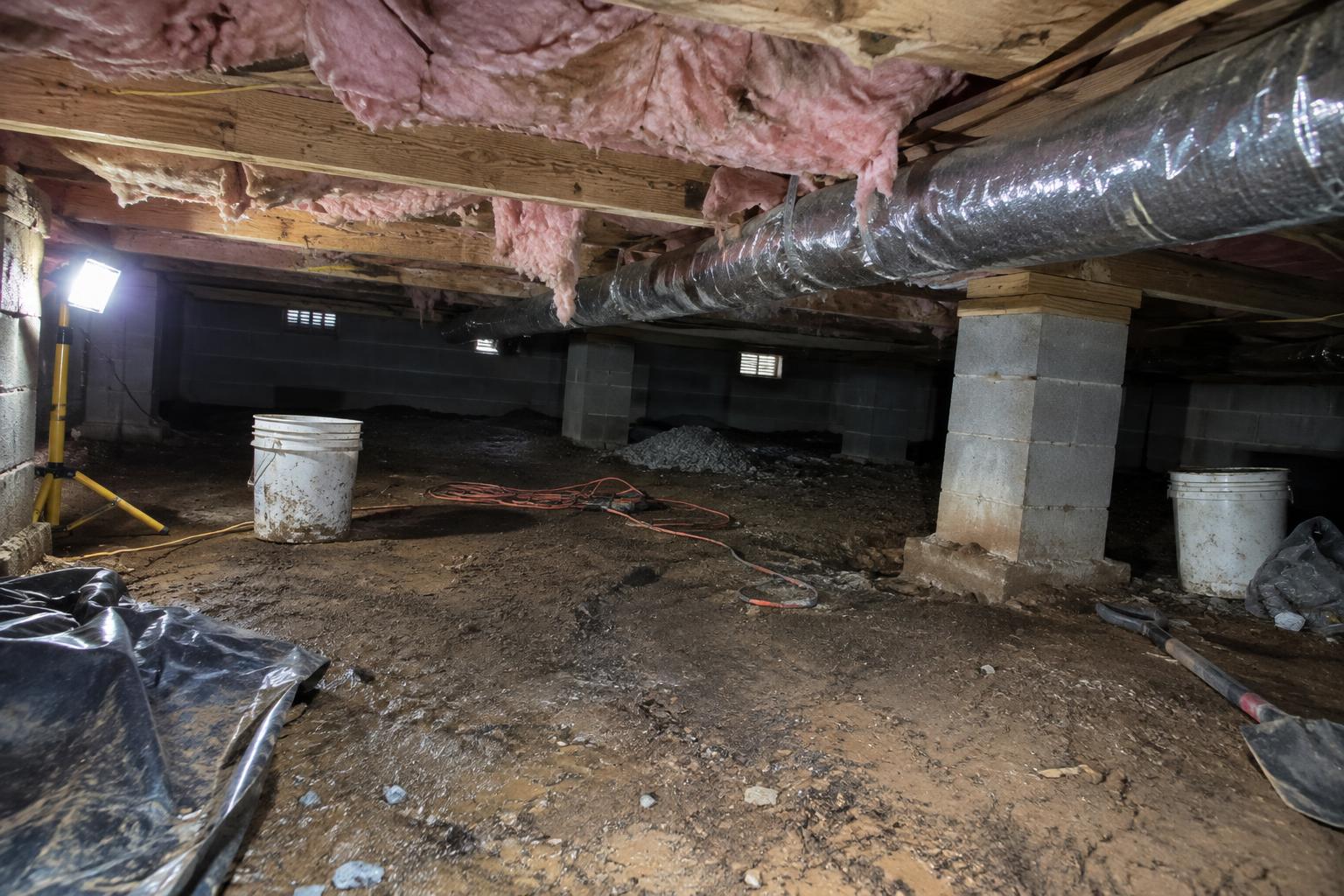
Summer humidity in Powell works its way under your house long before you ever notice it upstairs. Warm, moist air drifts through the foundation vents, meets the cooler dirt and wood below, and leaves everything down there damp. By late July that moisture has a place to live. The dirt stays dark, the joists feel cool and clammy, and musty air begins to rise through the floor. East Tennessee around Knoxville sits on red clay and karst limestone, which means water moves in strange ways here and rarely drains the way you expect.
For homeowners in Powell, Knox County and the surrounding areas of Anderson, Union and Campbell counties, the crawl space is the part of the house nobody looks at until something goes wrong. Standing water after a storm, a sagging spot in the kitchen floor, a smell that will not leave. Those are the signs that the space under your feet needs attention.
Why Summer Makes Crawl Space Problems Worse
Vented crawl spaces were built on the idea that outside air keeps things dry. In our climate that idea works against you. When the outdoor air is heavy with summer humidity and the ground under the house is cool, moisture condenses on the wood framing and ductwork. The result is wet insulation, beads of water on metal, and soil that never fully dries out.
Red clay holds water. After a heavy rain in Powell, that clay stays saturated for days, and the pressure pushes groundwater toward the lowest point it can find. Often that point is your crawl space. Add karst limestone, where water travels through hidden channels underground, and you get standing water in places that seem to have no source at all.
What Crawl Space Waterproofing Actually Involves
Good crawl space waterproofing in Powell is not a single product. It is a system built for the way water moves under your specific home. We start by looking at where water enters, how the ground slopes, and where the air is coming in.
The work usually includes a few core steps:
- A drainage path that collects water and carries it to a low point - A sump pit and pump where groundwater needs somewhere to go - A heavy vapor barrier across the dirt and up the walls to block ground moisture - Sealing the vents so humid outdoor air stops pouring in - A dehumidifier to hold the space at a steady, dry level
Each piece supports the others. A vapor barrier alone will not help if water is still pooling under it. A pump will not solve a humidity problem on its own. We fit the parts together so the crawl space stays dry through the wettest part of the year.
Signs Your Powell Crawl Space Needs Help
Some warnings show up inside the house. Floors that feel springy or dip near a wall point to joists that have taken on moisture and started to weaken. A musty odor in the hallway usually means damp air is moving up from below. Higher cooling bills can trace back to a crawl space fighting the rest of the house.
Other signs are visible only when you go down and look. Puddles on the dirt. White, powdery residue on block. Insulation hanging loose and dark with moisture. Small spots of mold on the underside of the subfloor. When joists have already begun to sag, the fix may call for Crawl Space Repair along with the waterproofing, so the structure is sound before the space is sealed.
What Standing Water Means and What to Do
Standing water under the house is the clearest signal that the crawl space has lost its battle with groundwater. It will not evaporate on its own in our humid season. It sits, it spreads, and it feeds the mold and rot already underway.
When you find water coming in, call us and say water is in your crawl space. We will fit you in as early as we can, come look at where it is entering, and lay out a plan to move it out and keep it out. We are licensed and insured, and our work is backed by a workmanship warranty, so the fix is built to hold.
Keeping It Dry After the Work Is Done
Once the system is in place, the crawl space holds a steady, dry condition through the seasons. The vapor barrier reflects light and shows dirt or new moisture quickly, which makes a yearly look-around easy. Check that the dehumidifier is running and that the sump pump responds when you test it. Keep gutters clear so roof water drains away from the foundation instead of soaking the clay beside it. Small habits like these protect the investment and keep your Powell home resting on dry, solid framing.